Le Journal27 octobre 2026
Al-Fashir Did Not Fall Alone: The War Leaders and Partners in Tragedy
Par Dar al-Salam Wadaah
Le journal, c'est la voix propre de DAR — son raisonnement, signé et daté. Les positions prises au nom de DAR Parle paraissent dans les communiqués
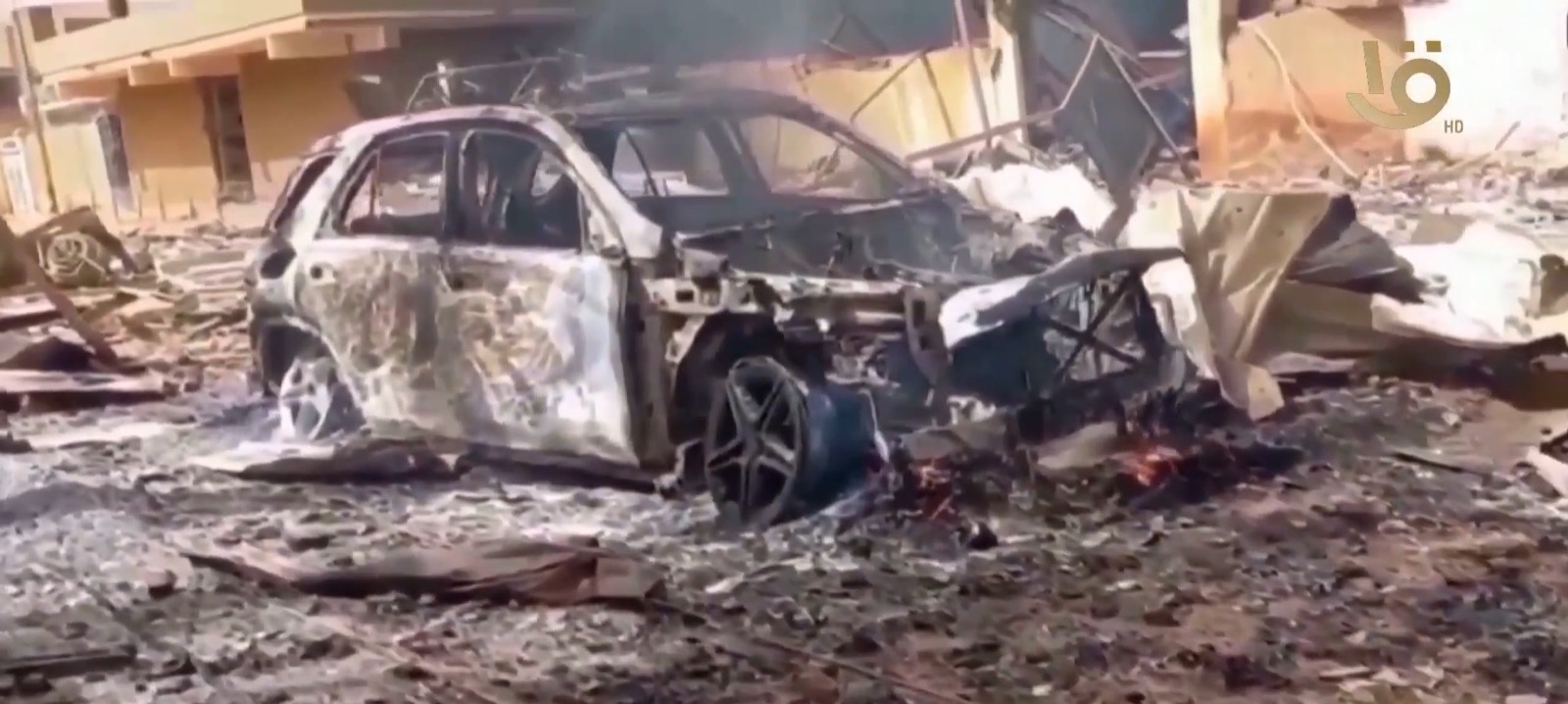
Al-Fashir did not fall in October 2025 at the hands of one party alone. It was the tragic outcome of a war that multiple parties helped create and direct, while civilians paid the price with their lives, their homes, and their safety. After the city fell, each side busied itself condemning the other and presenting its own version of the tragedy. But the question that must not be overlooked is: Who bears responsibility for the decisions that brought Al-Fashir to this fate?
There is no disputing the responsibility of the Rapid Support Forces (RSF) for besieging the city and the offensive that ended in its capture—this is well-documented alongside the violations committed by its forces. Yet condemning the RSF does not absolve the Sudanese Armed Forces (SAF) and the Joint Forces from accountability. Equally, holding the SAF and Joint Forces to account does not exonerate the RSF. Justice is not built on selecting defendants according to political and military alliances, nor should any party’s responsibility shift based on where they stand in the conflict.
When we speak of the fall of Al Fashir, we cannot separate the role of the RSF from that of the SAF and the Joint Forces. In November 2023, armed movements abandoned the neutrality they had maintained at the start of the war and chose to fight alongside the SAF. Most prominent among these were the Sudan Liberation Movement led by Minni Arko Minnawi, and the Justice and Equality Movement led by Jibril Ibrahim and others. This was not just a shift in political rhetoric but it changed the very nature of the conflict on the ground drawing Al Fashir ever closer to the frontline between the two blocs, indeed it was a primary reason Al Fashir became fully engulfed in fighting.
The people of Al Fashir had every right to expect all forces present in their city to prioritise protecting their lives. Yet what happened raises difficult questions about the military decisions those forces made, the extent to which they safeguarded civilian safety, and the accountability of leaders who chose to wage battle in a city home to hundreds of thousands of people.
Abdel Fattah Al-Burhan, in his role as commander of the armed forces, and Minni Arko Minnawi and Jibril Ibrahim, as political and military leaders of movements whose forces took part in the fighting, cannot be excluded from any serious discussion of political and military responsibility for what unfolded in Al Fashir. This is not to say their responsibilities are identical or that each personally committed every crime perpetrated in the city. Rather, their leadership positions, their decisions, and the forces they commanded or supported make their roles an essential part of understanding how Al Fashir reached this catastrophe.
On the other side, the RSF under its military leaders including Al-Nour Al-Qubba and Al-Safana, was a core party to the war that culminated in the city’s capture. Their responsibility for the actions and violations of their troops remains a matter demanding investigation and accountability based on evidence. Criticism of the SAF and Joint Forces must never become a means to divert attention from RSF crimes, just as RSF atrocities must not be used to shield their allies from scrutiny.
The United Nations has documented the final offensive on Al Fashir and the killings, abuses, and dangers faced by residents as they tried to flee. This record bears witness to the scale of civilian suffering and the urgent need to establish facts and assign responsibility on the basis of evidence.
Among the most troubling questions surrounding Al Fashir’s tragedy is the fate of civilians who could not leave the city, even as bombardment and fighting raged, and despite RSF announcements of safe passage routes.
I state clearly here that the Joint Forces used civilians as human shields, prevented them from leaving, and kept them trapped in a city that had become a battlefield. This is a responsibility that cannot be set aside when examining the Joint Forces’ part in Al Fashir’s ordeal. A civilian’s right to flee danger should never be subordinated to a leader’s calculations or their desire to hold military positions.
That the RSF declared safe corridors does not mean those routes were truly safe, nor does it absolve it of its duty to protect civilians and refrain from targeting them. But nor does it negate the responsibility of any force that barred people from escaping or placed them in harm’s way. How can we speak of protecting civilians when residents are prevented from leaving an area under fire? How can we justify keeping people in the midst of combat in the name of defending the city?
After Al Fashir fell, casualty figures were deployed in political discourse to advance a narrative that reduced events to the targeting of civilians alone—drawing no clear distinction between non-combatants and fighters who were present in the city, and offering no full account of what occurred. Yet the presence of armed fighters does not make civilians legitimate targets, nor does it revoke their right to flee conflict zones. Equally, the suffering of civilian victims does not exempt the forces stationed among them from answering questions about their military decisions and their role in endangering residents.
This is not a contest to claim the most compelling narrative about Al Fashir’s victims. The issue is that civilians should never be used as human shields during war, only for their suffering to be turned into political propaganda once the city falls. I believe we are now seeing the Al Fashir pattern repeat in Al-Ubayyid (El-Obeid), cheap propaganda at the expense of civilian victims. Families of those lost have a right to know how their loved ones died, who was responsible for each incident, and under what circumstances. That cannot be achieved if events are reduced to a pre-prepared political narrative, or if people’s suffering is exploited to excuse forces who were on the ground from accountability.
Concerns about civilians being put at risk were not limited to Al Fashir itself. In November 2024, human rights organisations called for an end to the military presence of Joint Forces in Zamzam displacement camp, warning of the dangers of militarising sites sheltering the displaced. Reports documented weapons, military positions, checkpoints, and troop movements within the camp, which housed vast numbers of civilians who had fled the war.
These facts raise a fundamental question: Should a displacement camp ever be factored into any party’s military calculations? The people of Zamzam fled violence in search of safety; no force had the right to turn their place of refuge into part of its military operations, nor expose them to further danger. A camp is not a military barracks, and the civilians who sought shelter there are not human reserves for anyone.
Denials and objections have been issued regarding some of the reported details of the Joint Forces’ presence in the camp. It is therefore important to distinguish between what reports have stated and what parties have denied—without abandoning the core principle that all forces are duty-bound to protect civilians and must not expose displacement sites to military risk.
Radio Dabanga: International Organisations Call for Joint Forces to Leave Darfur’s Zamzam Camp
Framing the conflict as a clash between social identities places civilians directly in harm’s way, allowing armed parties to justify their choices as collective defence while ordinary people bear the consequences. The people of Zamzam must not be reduced to their tribal affiliations, nor should an entire community be held responsible for the decisions of an armed force claiming to defend it. What is required is protection for civilians and accountability for those responsible for endangering them, whoever they are and wherever they are based.
Nor did the war end at Al Fashir’s boundaries. Other areas across North Darfur faced bombardment and attacks threatening lives and livelihoods. Al-Koma, Kutum and surrounding localities were part of the wider conflict picture and the displacement and destruction that accompanied it. Events in the Al-Zorg area where accounts describe a village destroyed and a large number of its inhabitants killed, also deserve full documentation and accountability for the forces responsible.
The Darfur Victims Support Organisation has documented aerial attacks on civilian areas in Al-Koma locality, North Darfur. These reports underscore the need to investigate bombing operations, identify responsible parties, and assess harm to civilians—all within the broader context of North Darfur and Al Fashir.
The armed forces’ responsibility for airstrikes does not vanish behind slogans of defending the state, just as the RSF’s responsibility for abuses does not disappear behind claims of defending communities or confronting adversaries. Every military operation must be assessed on its facts—who carried it out, the methods used, the harm inflicted on civilians, and adherence to international humanitarian law. The identity of the party launching an attack can never be a substitute for examining the evidence.
Herein lies the paradox that makes holding war leaders to account a political necessity that cannot wait: While communities shattered by conflict still seek safety and justice, leaders are reshuffling alliances and repositioning themselves within military and political blocs. Figures who once stood on opposing sides may now find themselves in the same camp, speaking of the state, sovereignty, and protecting citizens—without any serious review of their past decisions or the harm done to civilians.
Abdel Fattah Al-Burhan, Minni Arko Minnawi, Jibril Ibrahim, El-Nour Al-Qubba and Al-Safana do not form a single leadership, nor do they carry identical levels of responsibility. Yet their differing roles in the war make them central to the questions that must be asked: Who directed the fighting? Who sustained it? Who made decisions that put civilians in harm’s way?
It is not enough for a leader to now stand under the banner of protecting the state to escape scrutiny of their wartime role. Nor is declaring opposition to an adversary’s crimes sufficient to avoid accountability for actions taken by one’s own forces or allies. Individual criminal responsibility is determined through investigation and judicial process on the basis of evidence—but political and military responsibility cannot be erased by shifting alliances, changing rhetoric, or rebranding oneself as the sole legitimate voice of civilian protection.
This is not to suggest all parties bear equal blame for the scale or nature of crimes committed. It means refusing to exempt any party from accountability simply because they are a political or military ally. Those who besieged and attacked the city are answerable for their actions; those who bombed its districts or endangered its residents are answerable for theirs; and those who barred people from fleeing or used their presence to serve military objectives must also be held to account.
What happened in Al Fashir is not merely a humanitarian tragedy calling for sympathy—it is a political issue concerning who holds decision-making power in Sudan, how wars are waged, and the fate of civilians caught between forces all claiming to act in their name. The people of Al Fashir paid with their lives, their families, their homes, and their livelihoods, yet had no say in the decision to go to war, the nature of battles fought within their city, or the formation of alliances around it. Still they are expected to bear the consequences of decisions made by political and military leaders.
Genuine peace cannot be built on a narrative that selects victims based on who killed them, nor on a discourse that demands accountability for opponents while granting allies political immunity. Nor can a just state be built if civilian lives count for less than leaders’ calculations.
Al Fashir did not fall alone. It fell in the context of a war shaped by multiple parties, each bearing responsibility according to their role, their actions, and their choices. What its people need today is not more leaders claiming to speak for them, but a full and unvarnished truth that spares no one, and accountability that respects no alliance boundaries.
Al Fashir belongs to its people, not its leaders. The blood of its victims is no one’s political capital. The justice they deserve begins not with condemning the enemy alone, but with answering for every party proven responsible in this war and the devastation it has wrought.
Those who built this war have no exclusive right to write the story of its victims. And those who have exploited civilian suffering to justify their choices cannot claim public trust without answering the hard questions.
https://dar-talks.com/fr/journal/al-fashir-did-not-fall-alone/