Le Journal7 octobre 2026
When Sudan Speaks to the World — Who Speaks for the Sudanese?
Par Dar al-Salam Wadaah
Le journal, c'est la voix propre de DAR — son raisonnement, signé et daté. Les positions prises au nom de DAR Parle paraissent dans les communiqués
When Sudan takes its place on the world stage, who truly speaks for its people?
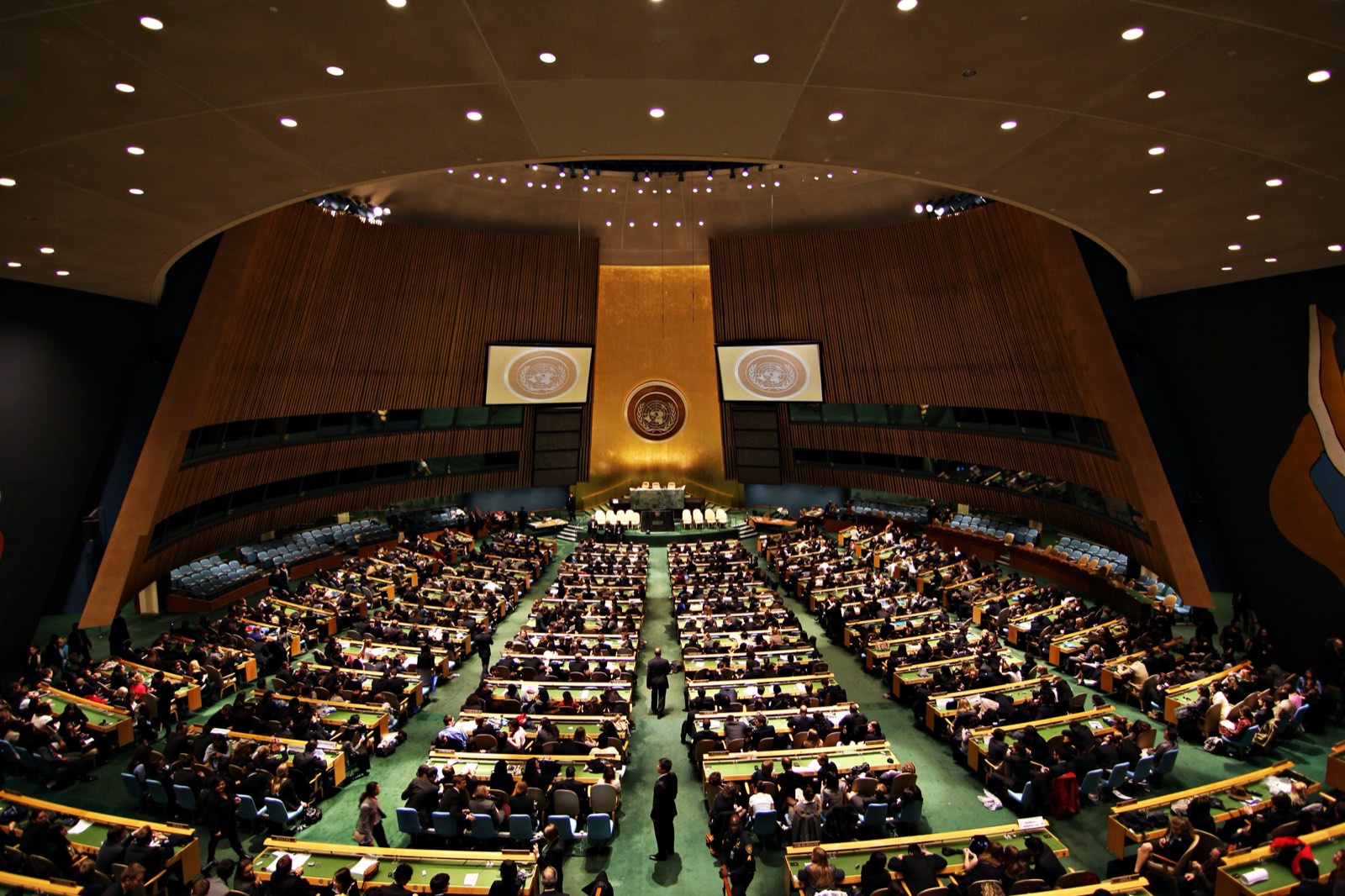
This year's United Nations General Assembly carried more than usual weight — and one absence spoke volumes. Abdel Fattah Al-Burhan, head of the Transitional Sovereignty Council, did not appear at the podium. This was no mere formality: the United States had denied him a visa, amid sharp disagreements over ceasefire plans — and behind that decision lay a far more fundamental question: who has the right to represent Sudan, and who holds genuine legitimacy there?
A US State Department spokesperson put it plainly: neither of the warring parties, nor their leaders, leads a constitutionally legitimate government.
And so a question hanging over Sudan since war broke out in April 2023 has returned with fresh urgency: who actually speaks for the country?
Foreign Minister Mohi El-Din Salem Ahmed Ibrahim did address the General Assembly, heading Sudan's official delegation. Diplomatically, he represented the state — but that does not mean the authority he serves carries a new mandate from the Sudanese people themselves.
Here we must untangle three ideas often muddled in international discussion: diplomatic representation, constitutional legitimacy, and popular mandate.
A nation may hold a seat at the United Nations through its established institutions — but that alone does not answer who governs with the consent of its people, or under a valid constitution.
This is no new dilemma for Sudan. Since the October 2021 coup shattered the transition to civilian rule and elections, the path forward has been broken. Since war erupted three years ago, reality on the ground has fractured further: control is split, rival authorities have emerged, and power is held by competing centres.
Yet the international community still treats Sudan as one sovereign, united nation — a position restated in September by the African Union, which reaffirmed Sudan's unity, sovereignty and territorial integrity, while calling for an inclusive, Sudanese-led political process to restore constitutional order — and making clear there can be no military victory here.
So in law, Sudan remains one country. In reality, it is ruled by more than one authority.
Which brings us to the heart of the matter: when the foreign minister speaks to the world — which Sudan does he speak for?
Does he speak for those living under authorities based in Port Sudan?
For the millions displaced across the country?
For refugees who have fled its borders?
For women for whom war has become daily life?
For children who have lost their schools, their hospitals, their safety?
For communities in regions outside his government's control?
These questions are not meant to weaken the idea of Sudan as a state — quite the opposite. They ask how we build a nation where representation flows from the will of its own citizens.
But the problem runs deeper than who speaks. It also matters what is said.
The General Assembly should have been a platform to lay bare a nation exhausted: civilians paying the steepest price; towns and villages reduced to ruin; women, children, displaced families and refugees abandoned by collapsing health, education and food systems — and the desperate need to protect people and open a path to peace.
Instead, the foreign minister's address focused largely on defending his government's stance on the war, sovereignty and foreign interference. He emphasised external support for the Rapid Support Forces; later, his delegation clashed openly with the United Arab Emirates in a war of words. His core argument: lasting peace is impossible without cutting off arms and mercenaries, dismantling the RSF, and returning all weapons to state institutions.
Here lies a critical tension. Whoever claims to speak for all Sudan does not just name an enemy — they are defining how the war must end.
When disarming the opposing side becomes a precondition for any settlement, we must ask: how does that translate into action? Neither side has won militarily; power is scattered across the country.
Disarmament can be part of peace — but it is usually the outcome of negotiation and agreement. Making it a first step raises a hard question: what if the other side refuses? Does the fighting continue until they yield? Or should the path begin with silence from guns, protection for civilians, and agreement on security and politics together?
This is the difference between fighting a war and ending one.
Framing the other side as the sole problem and demanding disarmament first may serve one party's agenda — but it does not answer the question millions of Sudanese are asking: how does this stop?
Days before the Assembly, the African Union set out a different approach: a humanitarian truce to build toward lasting calm, an all-inclusive political process led by Sudanese, and moving humanitarian, security and political efforts forward together. We will return to the AU's complex position in this conflict.
This is the core paradox. The world demands the Sudanese agree on an inclusive future — even as they remain trapped in a grinding war, with ordinary people having almost no voice in how peace is shaped.
At the United Nations, that contradiction was laid bare: exchanges between Sudan and the UAE turned into mutual accusations over foreign backing, while the call for Sudan's future to be decided by its own people remained just that — a call.
In the end, Al-Burhan's absence was not the story — and in many ways, it was a relief he was not there. The deeper truth is: his absence settled nothing. The foreign minister's presence settled nothing. Official recognition of institutions did not fix the split on the ground. And demands to disarm an opponent do not, in themselves, end a war.
Through it all, the most vital voice remains missing — that of the Sudanese people themselves.
Who speaks for the displaced, for women, for young people?
For villages and communities that have borne the cost of war, yet never chose to start it?
Who will decide what kind of nation emerges, how it is governed, how justice is done, and how people can live together again?
Al-Burhan's absence may have made headlines. But the real silence is the Sudanese people's absence from the conversation.
Sudan does not need someone to speak for it — it needs to speak for itself.
When that day comes, the questions will no longer be:
Who holds the guns?
Who controls the land?
Who sits at the UN?
They will be simpler, and far more profound:
Whom have the Sudanese chosen to speak for them?
Only then will the world hear from all of Sudan — not just one side of it.
https://dar-talks.com/fr/journal/who-speaks-for-the-sudanese/Disponible en :ENFRع