Le Journal12 septembre 2026
From Jebel Marra to Al-Jaili: chemical weapons are not a new weapon in Sudan
Par Dar al-Salam Wadaah
Le journal, c'est la voix propre de DAR — son raisonnement, signé et daté. Les positions prises au nom de DAR Parle paraissent dans les communiqués
There is news that should not be read as mere news.
New documents revealed by The Washington Post and The New York Times, with Le Monde adding even more serious details — details that speak not only of the use of chlorine gas in Sudan's war. They open a wide door onto the history of the Sudanese military establishment and its relationship with war, and with weapons that are not supposed to be used against human beings.
According to what these newspapers published, this was not an isolated incident. There is talk of development, testing, storage, and use of chemical weapons between July 2024 and early 2025. There are names of officers, communications, documents, and materials that were obtained, tested, and then transported to the battlefield.
If these documents are accurate, then we are not facing a soldier who overstepped orders, or an accidental use of a prohibited substance. We are facing an institutional capability.
Which brings us to the real question:
Who decided?
Who provided the material?
Who tested it?
Who stored it?
Who transported it?
Who permitted its use?
And who knew?
But before we get to Al-Jaili, we must go back to Jebel Marra.
In 2016, Amnesty International published an investigation in which it said it had gathered credible evidence of the use of chemical weapons against civilians in Jebel Marra. The investigation spoke of dozens of suspected attacks over nine months, of up to 250 deaths, and of horrific symptoms that hit the population, including children. Amnesty called for an international investigation through the Organisation for the Prohibition of Chemical Weapons.
That was one of the most dangerous accusations levelled against the Sudanese government forces during the Darfur war.
The Sudanese government denied the accusations, and the file never turned into a decisive international field investigation that would place the truth before the victims and public opinion.
But Jebel Marra was not just a dot on the map.
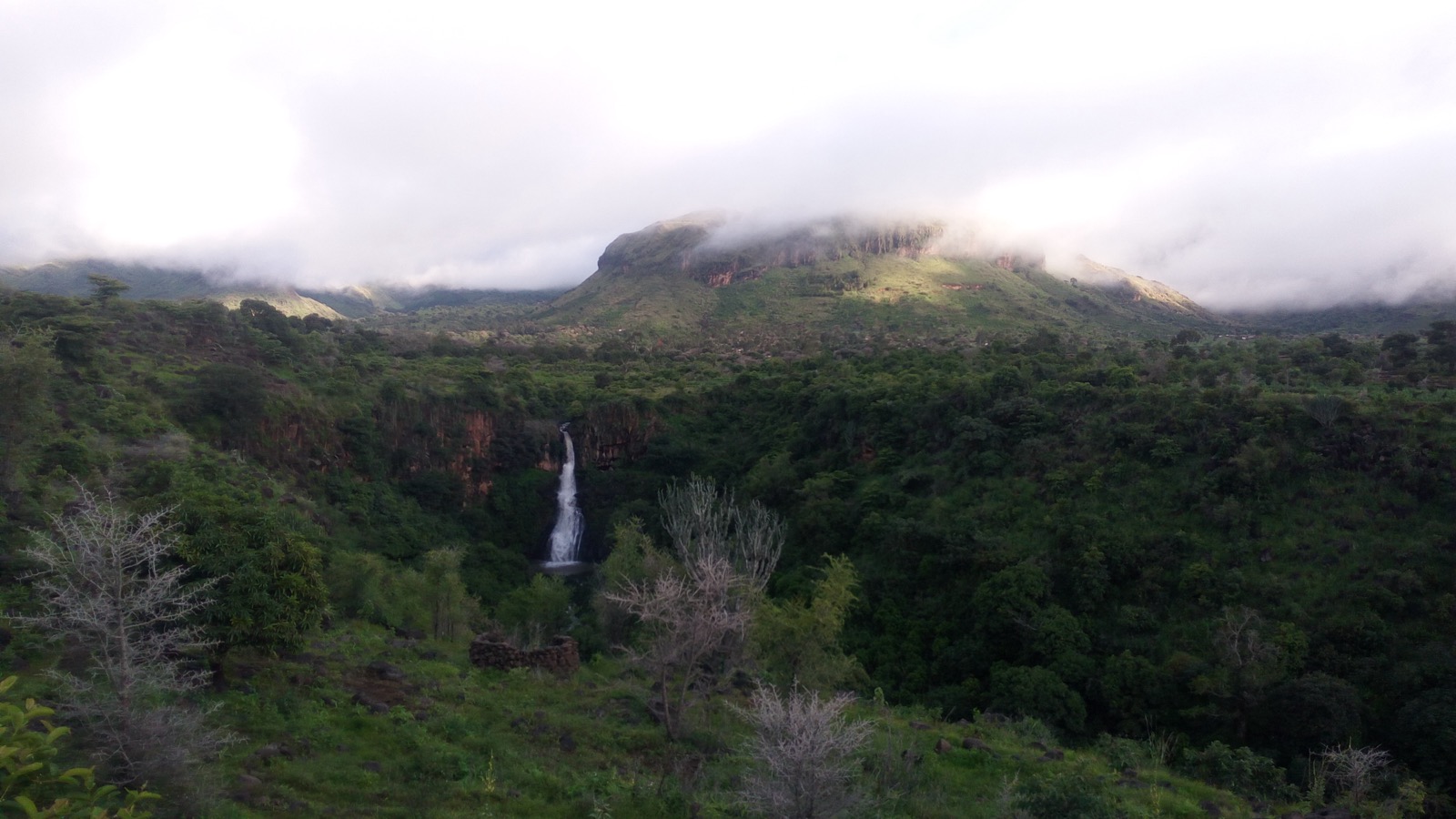
It was a test of a state's relationship with its citizens — when military force transforms from a means of protecting the state into a means of subjugating an entire society.
And in those years, the name Abdel Fattah Al-Burhan was present within this military establishment and on the arena of the Darfur war. He was an army officer who served in Darfur, specifically in Jebel Marra, before he later ascended the leadership hierarchy until he became commander of the armed forces and the de facto head of state.
This fact alone makes invoking the Jebel Marra phase necessary when we discuss today what is happening within the institution he leads.
What is even more telling is that there are phrases that remained circulating in Sudanese testimonies and writings about the period of Al-Burhan's presence in Darfur, attributing to him an extremely arrogant rhetoric toward the people of the region — so much so that the phrase "I am the lord of the Fur" became famous about him, and some who wrote about that phase linked it to the phrase "I am your lord, the most high."
I do not treat this phrase as independent criminal evidence, but its circulation in the context of testimonies from that phase reveals something important about the image of military authority in the memory of the people of Darfur: an authority that does not see the citizen as a partner in the state, but sees itself as entitled to decide his fate.
Here I do not want to use the phrase for political display.
I want to ask about its meaning.
Because the most dangerous thing in war is not only the weapon that kills.
The most dangerous thing in it is the mind that makes killing people and subjugating them an ordinary matter.
And this brings us once again to Al-Jaili.
The new documents, if accurate, say that the military establishment in 2024 did not content itself with using conventional weapons. It entered another space: developing chemical materials, testing them, and preparing them for use in war.
Here Al-Jaili becomes more than a military site.
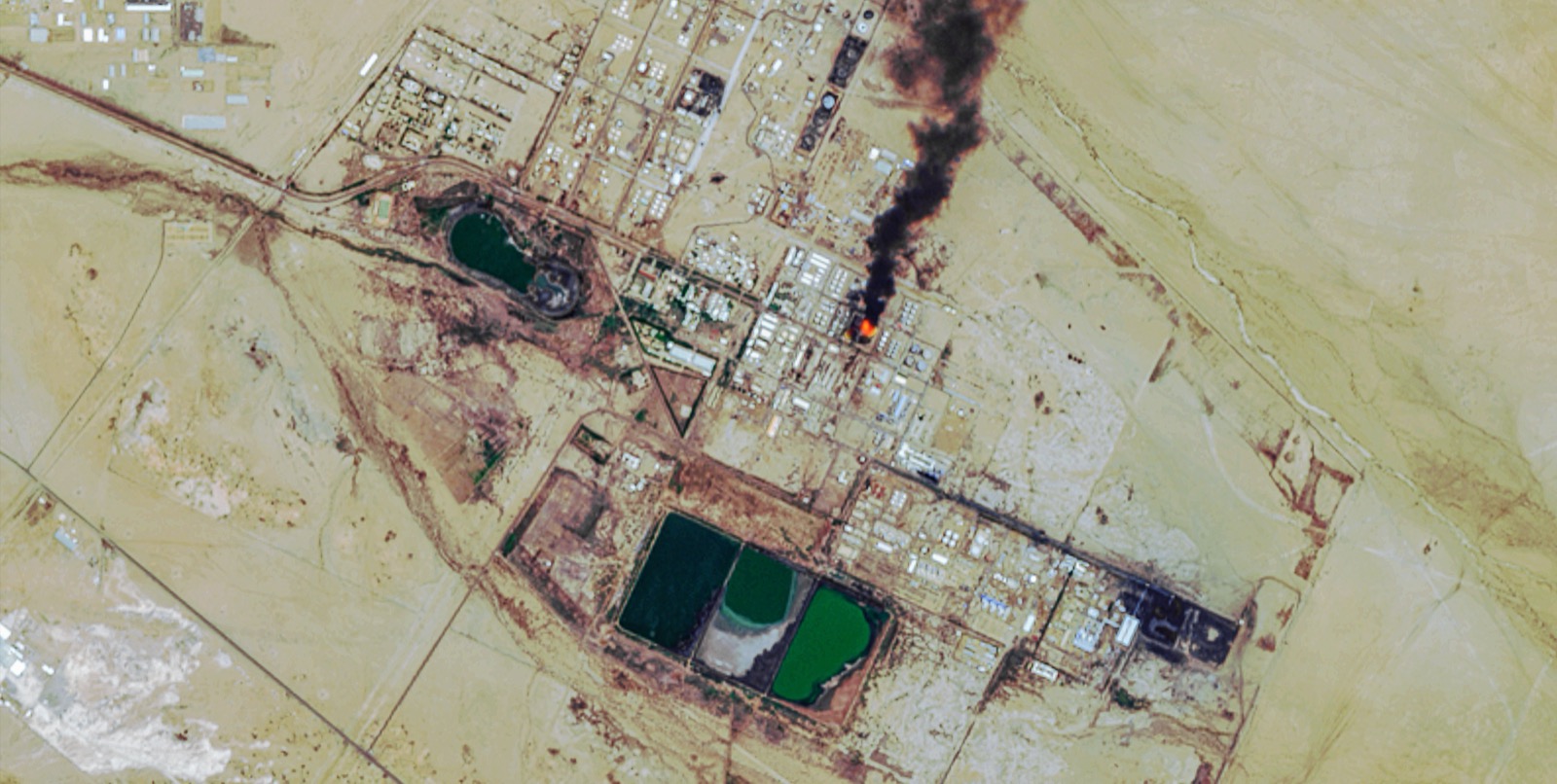
In September 2024, evidence, images, and testimonies appeared that a France 24 investigation, in cooperation with weapons and munitions experts, analysed and concluded that containers holding chlorine were dropped from the air near the Al-Jaili refinery on 5 and 13 September.
Then a C4ADS investigation came to open another layer of the story, tracing part of the container supply chain to India, where the material was originally intended for water treatment.
Think about the irony.
The material that enters Sudan to help make water safe for drinking can end up in the sky as a weapon. From the water station to the front.
It is clear evidence of a shift from sustaining life to manufacturing death.
Here the story of chlorine is no longer just a story of a chemical weapon. It becomes a story of a state in which the war machine can seize a civilian material and convert it into a military tool.
And the questions that follow are ours to ask, not to answer in advance: the dengue fever, the cholera, and the sudden deaths that struck the people of Omdurman; the fish, the rats, and the birds that died en masse in Al-Jazira and in the Nile. I do not claim that chlorine caused them. I claim that no one came to examine them.
Therefore, the question about the source of the chlorine is not a technical question.
It is a question about an entire chain:
Who imported?
Who received?
Who transported?
Who stored?
Who converted its use?
And who issued the decision?
And here political responsibility begins.
Because a leader is not asked only about what he did with his own hand.
He is also asked about what happens within the institution he leads.
Here Al-Burhan becomes part of the question — not because we have published evidence so far that he personally issued an order to use chlorine at Al-Jaili, but because the man who leads the armed forces today is himself answerable for the history of the institution that waged the Darfur war, and for the institution that the new documents show possessed, in the current war, the capability to develop and use chemical weapons.
Leadership does not only inherit rank and weapon. It also inherits the questions the institution left unanswered.
Therefore we cannot say that Jebel Marra ended in 2016.
If the accusations of chemical use in Jebel Marra remained without a decisive inquiry, and then years later documents appeared about a chemical programme within the same military establishment, then the least that can be done is to open both files side by side.
I am not saying that the same weapon moved from Jebel Marra to Al-Jaili.
I am not saying that Al-Burhan personally ordered the Jebel Marra attacks.
I am not saying that every bombardment in Darfur or Kordofan was chemical.
This is not the method of investigation.
But I am saying that there is an institutional continuity that deserves investigation. And that ignoring it would be a political and historical mistake.
States do not begin their history from scratch in every war. And officers do not lose their memory when the front changes.
And military institutions do not erase their previous experience merely by changing commanders or slogans.
Therefore we must reread the Sudanese war through what it left behind, not through the statements it issued.
In Nyala, Mellit, Al-Kuma, Alzorg, Jebel Marra, Kordofan, Khartoum, and Al-Jaili there are maps of bombardment, destruction, displacement, and injuries.
But perhaps there are also other maps we have not yet drawn.
A map of the materials used.
A map of the aircraft.
A map of the military units.
A map of the ammunition depots.
A map of the supply chains.
And a map of the victims who showed unusual symptoms and found no one to take samples from their bodies, their clothes, their water, or their soil.
Here we must deal cautiously with everything that was said about water that changed colour, black rain, or strange smells and substances that appeared in some areas during the bombardment and the war.
These things are not automatic evidence of a chemical weapon. But they are also not something we should laugh at or ignore.
Every unexplained trace is a question.
And a question does not become evidence except after examination. Therefore the real investigation must not search only for the bomb. It must search for its trace.
In the human body.
In the water.
In the soil.
In the plant.
In the animal.
In the buildings.
In the remnants of munitions.
And in the medical records.
Some of these things have been lost. But others remain.
And perhaps some of them still exist. Here science can have its say.
But Sudanese politics must provide the will that makes science capable of reaching the truth.
Then there is another question no less important: why did these documents appear now?
Le Monde said that security sources informed it that the documents came from Israeli intelligence agencies, while American reports spoke of an intelligence source from the Middle East without specifying the state.
This deserves investigation.
But I do not want to fall into the trap that could turn the entire issue into a question about Israel.
Who leaked the documents is a question.
But what the documents contain is another question.
And if Israel or others had these materials, why did they appear now?
Why at this specific moment?
And what is their relationship to the regional conflict over Sudan?
All of that deserves an answer.
But even if it is proven that the leak came from an intelligence agency that wants to influence Sudanese or international politics, that does not automatically make the crime true or false.
Evidence does not become false because your opponent revealed it, nor does it become authentic because your ally published it. Evidence is examined.
This is a rule we Sudanese must hold onto before others.
Because Sudan paid a heavy price when truth turned into a mere political weapon.
Now we have a different opportunity.
An opportunity to deal with the file as a matter of state, society, and victims — not merely a battle between the army and the Rapid Support Forces.
If the Sudanese Armed Forces did indeed use chemical weapons, then the crime does not end at the moment the container was dropped.
There are those who manufactured.
Those who transported.
Those who ordered.
Those who executed.
Those who knew.
Those who covered it up.
And those who tried to remove the trace.
Here we reach the question that I consider more dangerous than all previous questions:
Are we facing a new crime, or an old capability that has re-emerged?
I do not have the answer.
And no one should claim to have it before an independent investigation with full access to the sites, documents, witnesses, and samples.
But we now have enough to open this investigation.
From Jebel Marra to Al-Jaili, the story is not the story of a single weapon.
It is the story of an institution, a memory, and power.
And the story of a country that kept burying its crimes under the rubble of war, then returns to ask why the crimes repeat.
We spent years asking: who owns the sky?
Perhaps it is time we asked the question we have long evaded:
What did the sky leave on the ground?
Perhaps the truth we have been searching for for years is not inside the bomb alone.
It may be in the body of a child from Jebel Marra.
And in the land of Al-Jaili.
And in water that changed colour.
And in a testimony no one heard.
And in an officer who knew.
And in a leader who could have asked and did not ask.
And from Jebel Marra to Al-Jaili, perhaps the time has come for us to read the history of the Sudanese war from its effects, not from its leaders' narratives.
The story is not over yet.
To be continued.
https://dar-talks.com/fr/journal/from-jebel-marra-to-al-jaili/