Le Journal19 octobre 2026
The War on Sudan: When Sovereignty Becomes the Victim

Par Dar al-Salam Wadaah
Le journal, c'est la voix propre de DAR — son raisonnement, signé et daté. Les positions prises au nom de DAR Parle paraissent dans les communiqués
Egyptian bombings of mining sites, the responsibility of the Sudanese military leadership, and the conflict over land and resources
The war in Sudan is no longer a mere power struggle between the Sudanese Armed Forces (SAF) and the Rapid Support Forces (RSF). It has become an existential crisis threatening the survival of the state itself, opening the door for foreign interventions to shape the country's future, territory, resources, and political autonomy.
In this context, the bombardment of artisanal mining sites in the Northern Valley and at Jabal al-Uqaydat, near the Egypt–Sudan border, is an assault on civilians and a serious violation of Sudanese sovereignty. Reports of strikes in June 2026, followed by renewed bombing in October, raise a question that goes beyond mining and borders: what happens when an internal war becomes a gateway for expanding foreign intervention, while the state's institutions cannot protect their own citizens?
Targeting Sudanese civilians inside their own country cannot be justified in the name of fighting smuggling or protecting Egyptian national security. Sudan is a sovereign state. Its citizens do not become military targets merely because they live in a border zone or work in an unregulated economy. Geography does not grant Egypt the right to act inside Sudanese territory, and war does not grant any state an open mandate to use force against civilians.
From border security to sovereign violation
On 16 June 2026, reports emerged of airstrikes on artisanal mining sites in the border region. Local testimonies spoke of dead and wounded, and of miners fleeing in large numbers. Miners and Sudanese sources directly accused the Egyptian military of carrying out the attacks.
On 25 June, the investigative platform Mada Masr published an inquiry including eyewitness accounts from the region and the field developments that followed. Sudan Tribune covered the June allegations as well, before the issue returned with the attack reported in October. Final attribution for each strike still requires an independent investigation, but the volume of reports and testimonies demands serious accountability, not dismissal.
On 22 June, the Egyptian Armed Forces announced a security campaign in its southern military zone, saying it targeted illegal mining, weapons and drug trafficking, and irregular migration. It said 223 people had been arrested: 87 Egyptians and 136 foreign nationals. But the statement never specified the foreigners' nationalities, and never established that those arrested were the same people killed in the airstrikes, or that most workers at the mining sites were foreign.
A distinction must be drawn here: a state has every right to address violations inside its own territory; it has no equivalent right to project military force beyond them. If smuggling or mining violations are the problem, they must be handled through the law, legitimate border cooperation, and procedures that protect civilian lives.
The use of military force inside another state's territory, if proven to have occurred without a lawful basis, is not a routine security measure and cannot be justified by mere suspicion of a border or economic infraction. What makes it worse is the timing: Sudan is living through a devastating war in which millions face killing, displacement, and hunger, while the state's capacity to guard its borders, monitor its resources, and hold violators to account has collapsed. This is not to deny Egypt's right to defend its security, but to reject converting that right into a justification for operating inside Sudanese territory without respecting Sudan's sovereignty and the rights of its citizens.
From June to October: why did the strikes reoccur?
Concern over the targeting of miners did not begin in October. The region was hit in June, and the accusations returned with the October assault.
On 11 October, Al Jazeera reported that the Emergency Lawyers organisation accused Egyptian forces of targeting civilian miners in the Northern Valley, with an initial death toll estimated at around 72. The report noted that the new assault followed the June strikes, which reportedly killed 23 workers. Al Jazeera made clear that the latest toll could not be independently verified, and that Egyptian authorities had issued no official comment.
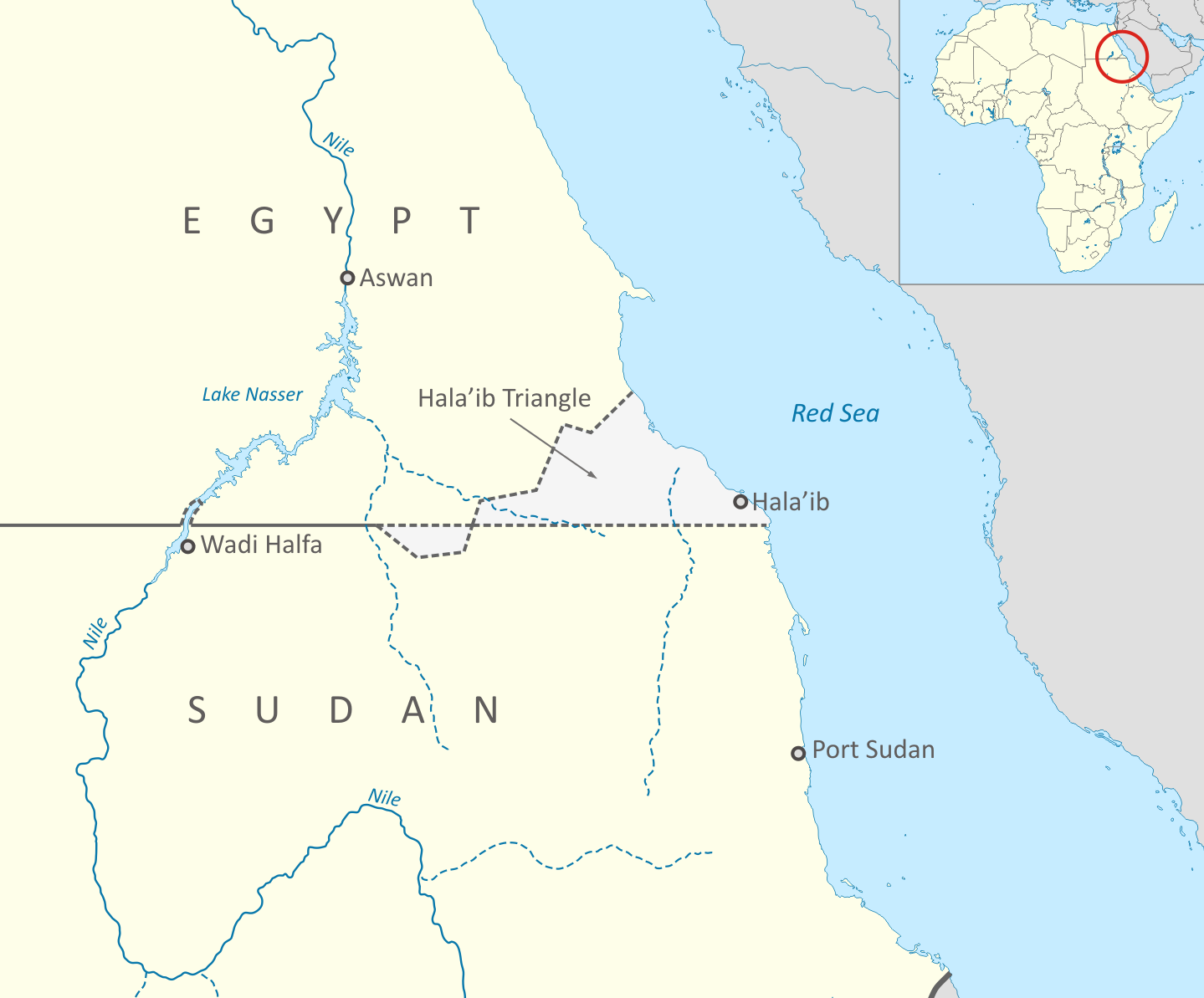
These events must be read as more than isolated incidents. The repetition of strikes within months raises urgent questions: did the authorities investigate June? What was done to prevent a repeat? Were clear arrangements put in place to protect civilians working in the border zones? This is a highly sensitive frontier, with long-running disputes between Egypt and Sudan over parts of the border, including the Halayeb and Shalateen triangle. But a border dispute gives neither party the right to disregard civilian lives, and it does not exempt states from their legal obligations.
When the victims' nationality becomes a pretext
On 12 October 2026, statements attributed to Sudanese Army Major General Mutasim Abdel Qader Hassan claimed that those killed in the Northern Valley were from Niger and Mali, not Sudanese. Sudanese media circulated the remarks while the victims' identities and the circumstances of the attack were still fiercely contested.
The statement deserves scrutiny — not because the victims' nationalities are irrelevant to an investigation, but because an obsessive focus on identity can become a way of diverting attention from the real question: who used lethal force against these people, in what circumstances, and what legal liability follows?
The Egyptian military's announcement of 136 foreign arrests in June proves neither that all workers at the mines were foreign, nor that the victims of the latest attack were exclusively Malian and Nigerien. A person's nationality cannot be established by a televised statement; it requires verifiable evidence.
But the deeper point goes beyond whether these claims are true. Even if some of the dead held Malian, Nigerien, or other nationalities, that would not justify their killing, nor would it erase their right to life and legal protection.
Does a civilian's life become worth less because they are foreign?
Does a suspected breach of border or mining rules become a licence to target them militarily?
If people entered a zone illegally, their status must be handled through due process; they cannot be converted into military targets on suspicion. And if they were Sudanese citizens working on Sudanese land, casting doubt on their nationality must not become a tool for devaluing their lives. Shifting the debate from accountability for using force to the identity of the victims answers nothing. The obligation to protect civilians does not depend on nationality.
Who authorised the use of force inside Sudan?
Responsibility does not rest on the Egyptian side alone. Any assault on Sudanese territory places the leadership exercising de facto authority in direct responsibility to its own citizens. Protecting sovereignty is not a separate foreign-policy file; it lies at the core of the duties of any authority claiming to represent and defend the state.
A committee to investigate the October bombings has been announced, but committees are not enough unless their findings are made public, responsibilities are clearly assigned, and the public is told what actually happened. Sudanese citizens have a right to know who carried out the strikes, which sites were hit, what civilian harm resulted, and whether any prior communications or arrangements existed between the Sudanese and Egyptian leaderships over military operations near the border. If the operations were carried out in prior coordination with the Sudanese military leadership, or with its consent for Egyptian aircraft to enter Sudanese airspace, citizens have a right to know the terms: who authorised it, what limits were placed on the mandate, and what safeguards were established to protect civilians.
Security coordination with another state does not grant that state an absolute right to use force against citizens. Even if Sudanese consent for Egyptian overflights were proven, that would not settle the lawfulness of targeting civilians, and it would not absolve any party of its obligations under international law. Any use of force must meet the test of necessity and the relevant legal constraints, with every death investigated and every proven violation punished.
If the Sudanese leadership objected to the bombing, it must say so and say what it did. If no consent was given, the authorities must explain how the attacks happened. No one can assert Sudanese approval of the strikes without evidence, but nor can political and military relations become a pretext for withholding information from the public. The question facing the Sudanese leadership is not only who bombed the miners, but what the state did to protect them, and what it will do to prevent it happening again.
Gold and resources: what does the "Deep Metals" agreement reveal?
The Northern Valley acquires added significance because of its connection to artisanal gold mining, at a moment when Sudanese resources have become part of a tangled web of economic and security interests shaped by the war. War erodes Sudanese control over the country's own resources, opening the field to smuggling networks and competition over production zones and border routes. One issue deserves particular scrutiny: the publicly documented contradiction around the mining company "Deep Metals."
On 4 September 2025, the Egyptian financial newspaper Al-Borsa reported that the businessman Mohamed El-Garhi, representing the company, had signed a strategic agreement with the Sudanese Ministry of Minerals worth $277.3 million in investments. The report said the agreement covered exploration and production at sites across the states of Northern, Red Sea, River Nile, and Gedarif, alongside the acquisition of 85% of the Arkidia gold mine, a tailings processing plant, and a gold refinery.
But on 6 September, the Sudanese Ministry of Minerals denied signing any agreement or memorandum of understanding with the company, and said it had entered into no contractual or legal obligation toward it. A public contradiction was now on record: a press report describing a major investment deal, and an official denial from the ministry itself. That contradiction alone proves neither a secret deal in the Northern Valley nor a link between a mining agreement and the bombing, but it raises legitimate questions about the nature of the investment understandings, about who was negotiating them, and about whether other concessions or arrangements exist that have never been disclosed.
On 13 October 2026, the journalist Mujahid Bushra published an investigation on the site Ain Al-Haqiqa ("Eye of the Truth") describing what he called a secret mining agreement in the mountains of the Northern Valley. He raised allegations of shared commercial interests between Sudanese and Egyptian figures, and of a possible connection between those arrangements and the military operations targeting artisanal mining sites. The investigation contained serious accusations about who stood to benefit, and about the role of influential political and military figures.
These allegations have not been independently verified and cannot be presented as settled fact. Nor do the published reports about the announced investment agreement prove, on their own, that its concessions covered the Northern Valley site, or that the agreement was a direct cause of the bombing. But a documented contradiction over a mining agreement, alongside a journalistic investigation raising allegations of further arrangements, makes it essential to release the relevant documents: to verify the contracts and concession maps, to identify the real beneficiaries of any project, and to disclose the communications and decisions that preceded the military operations.
The point is not to assume a conspiracy. It is to ensure that Sudan's resources are not managed through opaque arrangements, and that any investment in gold is subject to law, transparency, and public oversight. The continuation of the war weakens citizens' ability to monitor what happens in their own regions, leaving decisions about their land and resources ever more hostage to the calculations of military and political powers. This is how a war over power becomes a force that threatens the Sudanese people's ability to retain real control over their country.
When violating Sudan becomes justifiable
The bombing cannot be separated from the discourse that accompanied it on Egyptian social media, where posts justifying the targeting of mining sites as a defence of borders and national security appeared alongside rhetoric demeaning Sudanese people and casting doubt on their rights and dignity.
I do not equate all Egyptians with this discourse, and I do not treat every social-media post as an expression of government policy. But I reject the idea that protecting borders can become a moral and political cover for justifying the killing of Sudanese inside their own country. Relations between Sudan and Egypt cannot rest on an imbalance of power. The relationship the peoples of this region deserve is one between states equal in sovereignty and rights — not one in which the stronger party decides what the weaker one is allowed to accept.
Is Sudan being treated as an arena of influence?
What is happening forces us to see foreign interventions within a wider context than the bombing alone. Sudan sits at a crossing of multiple regional and international interests, and its land, resources, and geography carry real strategic weight. As state institutions collapse and the war widens, external powers gain ever greater ability to shape the course of the conflict, and to narrow the choices available to Sudanese themselves.
The problem is not the existence of outside interests as such; every state pursues its interests in its neighbourhood. The problem begins when those interests become a justification for interfering in Sudanese decisions, for exercising force inside Sudanese territory, or for treating the country's future as a matter to be negotiated among foreign powers rather than decided by its own people.
That is why the bombing of Sudanese civilians in areas the Sudanese authorities regard as their territory is not a mere border incident that can be detached from the national crisis. It is part of a wider reality in which Sudanese sovereignty is under pressure, while citizens lack institutions capable of defending it effectively. This does not mean that every Egyptian or regional move aims to occupy Sudan. But it would be equally wrong to ignore the signs showing how war can create conditions that allow foreign influence to expand at the expense of national decision-making. If this path continues, Sudan risks being gradually turned into an arena whose interests are managed from outside, while its own people pay the price.
The war on Sudan
The most dangerous thing about Sudan's war is that it does not stop at destroying society and weakening the state. It also erodes the Sudanese people's ability to defend their right to determine their own future. When the country is consumed by fighting between military forces, when civilian institutions recede, and when citizens' lives and resources become hostage to armed calculations, sovereignty loses its practical meaning — even if it remains preserved in texts and official statements.
Here lies the paradox. The forces that claim to be waging war in defence of the state may find, as the war continues, that they are presiding over a weaker state, more exposed to foreign intervention, and a people less able to defend their rights. That is why rejecting foreign intervention cannot be separated from rejecting the continuation of the war itself. Both are tied to the right of Sudanese people to build an independent, civilian state capable of protecting its citizens, managing its resources, and holding its leaders to account.
Defending sovereignty does not mean hostility to the Egyptian people, or denying the shared interests between the two countries. It means building a relationship based on respect for borders, on the non-use of force against civilians, on non-interference in Sudanese affairs, and on recognition of the Sudanese people's right to run their own country free of external diktat. Sudan does not need a leadership that raises the slogan of sovereignty while the basic questions — protecting citizens, protecting resources — remain unanswered. It needs a national project that returns power to the people, and places the protection of human beings, land, and resources at the very centre of the state's responsibilities.
The bombing of Sudanese civilians in the Northern Valley, and the repeated accusations of airstrikes that have accompanied it, make investigation and accountability unavoidable. The issue cannot be bypassed in the name of security, or regional relations, or disputes over the victims' nationalities. A civilian's life is not a detail. Sovereignty is not a slogan to be invoked when it serves power, and abandoned when defending it becomes politically costly.
Sudan is not an ownerless land, and its people are not marginal actors in deciding their own fate. No state, however powerful, has the right to treat Sudan's territory and resources as an open field for its interests.
Sudanese sovereignty is not a grant from abroad, and it is not a privilege conferred by military force. It is a right of the people and a responsibility of the state — and it cannot be surrendered in the name of war, security, or political interest.
https://dar-talks.com/fr/journal/when-sovereignty-becomes-the-victim/