Le Journal26 octobre 2026
When Women Are Forced to Bury Their Dead: One Year Since the Fall of Al-Fashir
Par Dar al-Salam Wadaah
Le journal, c'est la voix propre de DAR — son raisonnement, signé et daté. Les positions prises au nom de DAR Parle paraissent dans les communiqués
A year has passed since Al-Fashir fell to the Rapid Support Forces. But the passage of a year does not mean the women who survived the city have regained their lives or reached safety. Some left with their children, having lost their homes and members of their families. Some travelled long distances in search of shelter, medical care, or any measure of safety. What should have been the end of an escape journey became the start of another: further displacement, loss, and deprivation.
When we speak of the fall of Al-Fashir, we mostly speak of military control, shifting frontlines, and the scale of displacement. But behind these headlines lie entire lives in ruins. There are women who lost not only their homes but also the people who formed their daily support. There are mothers forced to protect their children in circumstances lacking even the most basic necessities of life. The question we must ask after one year is not only how many people left Al-Fashir, but what happened to the women after they left? And did they find the protection that should be a fundamental right for anyone fleeing war?
One survivor I spoke to lost her family home in Al-Fashir in an airstrike that killed her mother. She was displaced to Mellit, then continued her journey until she reached Al-Afad camp in the Northern State. Her suffering did not end upon arrival. She and other displaced people faced hostility from some local residents who said they did not want to receive those coming from Darfur and that they should leave. This testimony does not necessarily represent every displaced person's experience in Al-Afad, but it reveals a painful truth: survival under bombardment is no guarantee of safety, and losing one's home and family can be followed by a new sense of rejection and not belonging — even in the place meant to offer protection.
This is not an isolated story separate from widespread displacement. According to the International Organisation for Migration, around 127,000 people were displaced from Al-Fashir and surrounding villages between 26 October 2025 and 13 January 2026. Nearly three-quarters had already been displaced before and were forced to flee again. This is important because many of these women did not begin their displacement journey from Al-Fashir last October. They had arrived there after leaving their original areas in earlier stages of the war, only to face a new wave of violence that forced them to start all over again.
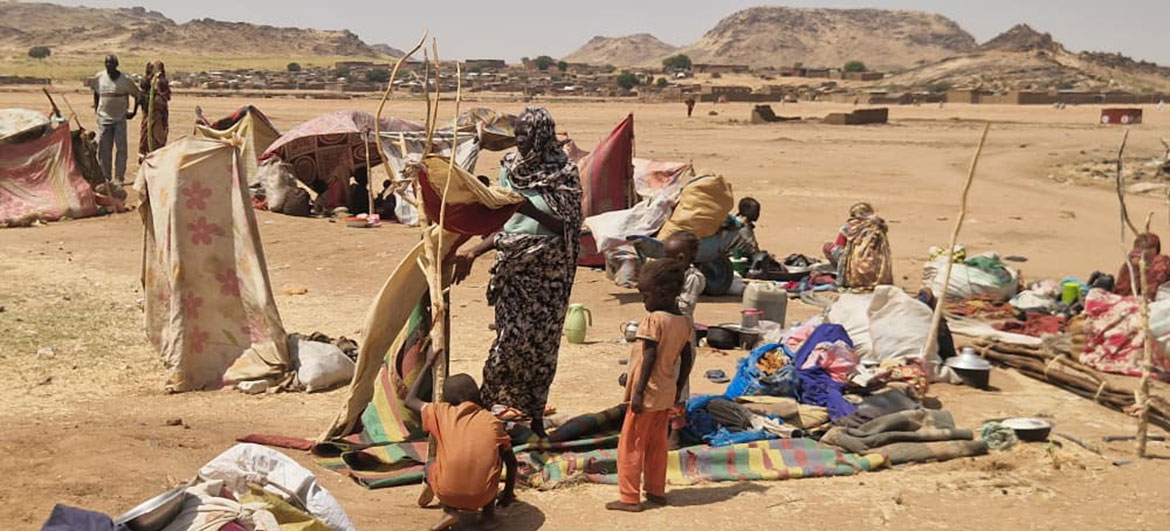
And suffering does not end with losing shelter. Women who reach displacement sites face shortages of food, water, healthcare, and protection services. The United Nations Population Fund has documented experiences of women who fled Al-Fashir and arrived in Al-Afad facing severe difficulties accessing care during pregnancy and childbirth. Some travelled long distances under harsh conditions; others reached displacement sites before they could access the medical care they needed. These accounts show that the journey to safety can be dangerous in itself, and reaching a camp does not necessarily mean receiving essential services.
In Darfur, one cannot discuss protecting women without discussing collapsed healthcare. Pregnancy and childbirth — times meant to be surrounded by care — have become life-threatening experiences for many women. In August 2026, UNFPA warned that pregnant women in parts of Darfur endure arduous journeys to reach hospitals capable of providing emergency obstetric care. In some areas, only one hospital can perform caesarean sections, serving vast distances of villages and communities. Women in labour or experiencing haemorrhage may walk for hours or be carried on makeshift wooden stretchers. This is not merely a gap in services; it is a direct consequence of a war that destroyed infrastructure, restricted access to treatment, and left women facing risks many of which could have been avoided with timely care.
The story of Siham Musa Abdel Rahman embodies one facet of this tragedy. Siham, pregnant with twins, died in labour amid difficulties accessing medical care in Darfur, according to Sudanese press reports from Ultra Sudan and Al Araby. Her death was not just a painful tragedy for a woman losing her life bringing her children into the world; it was a reminder that accessing healthcare can be a matter of life and death in war zones.
In a related scene, women carried Siham's body on their shoulders to the cemetery for burial. Accounts tell that women organised and took charge of funeral and burial rites — duties traditionally performed by men in their society under such circumstances. This does not mean women never participate in burials generally; rather, this specific incident reveals how women are forced to bear extra burdens when war and loss leave a void in communities. It was a funeral for a woman who died in childbirth, but also an image of a community whose women strive to carry on life and bury their dead amid a lack of protection and basic services.
What happened to Siham should not be read as a tragedy disconnected from the war. When distance to a hospital becomes a danger to a woman's life, when pregnant women cannot find specialist care nearby, when medical services are depleted and medicines and supplies struggle to reach affected areas, preventable deaths become part of the price women pay. UNFPA has confirmed that shortages in reproductive and safe childbirth services are putting the lives of women and children at growing risk in Darfur and other parts of Sudan. This makes providing healthcare part of civilian protection — not a secondary humanitarian matter to be delayed until fighting ends.
These conditions cannot be separated from the abuses seen in and around Al-Fashir. In a report released in July 2026 following an investigation including 247 interviews — 39 with children — Amnesty International concluded the Rapid Support Forces committed crimes against humanity during its campaign to take control of Al-Fashir, where it was fighting the Sudanese Armed Forces and allied Joint Forces. Abuses documented included killing, forced displacement, imprisonment, torture, and sexual violence. The scale of these violations shows why events cannot be treated simply as another wave of displacement or relief crisis. Civilians need protection, those responsible must be held accountable, and survivors' suffering must not become passing stories that fade when news headlines change.
Nor does displacement always end at Sudan's borders. Some women fleeing war cross into neighbouring countries seeking safety, only to face new challenges around food, treatment, shelter, and protection. In Uganda, for example, The Guardian reported how humanitarian funding cuts have affected refugees — including reduced food assistance, clinic closures in some settlements, and declining health services. Not all Sudanese women in host countries face the same circumstances, but it illustrates that crossing a border does not automatically end vulnerability, and host nations' ability to deliver services is shaped by international support available to them.
One year on from Al-Fashir's fall, the international response must not be measured by statements issued, meetings held, or promises made. It must be measured by whether women can reach safety, whether pregnant women can receive medical care, whether survivors can report abuses without fear, and whether aid reaches communities overlooked by attention.
Protection is not just a phrase in an international resolution. It means safe passage out of conflict zones, a health centre able to save a woman in labour, shelter where families need not fear expulsion or insult, and genuine accountability to prevent crimes from recurring.
Practical steps are needed without delay. Safe and sustained humanitarian access must be secured to Al-Fashir, its surroundings, and displacement sites — prioritising hard-to-reach rural areas. Hospitals, mobile clinics, and community midwives must be supported, and medicines and emergency childbirth supplies provided. Women and girls — including survivors of sexual violence — need effective protection, and safe, confidential avenues to report harm and seek help. International bodies must support evidence collection and preservation in ways that protect witnesses and survivors, and keep pressing for accountability for crimes against civilians. More support must go to host nations and communities so resource shortages do not become an additional cause of rejection and deprivation.
The women who left Al-Fashir do not need their stories told only to remind us that war is painful. They need those stories translated into protection, services, and accountability. The woman who lost her mother and family home only to face yet another journey of displacement is not just a statistic. Siham, who died in labour, is not just a name in a news report. Each represents a reality that statistics alone cannot explain.
One year later, women still carry the marks of war in their bodies, memories, and daily lives. Some carry their children in search of safety; some bear responsibility for households that lost their breadwinners; some bury their dead under harsh conditions. Until circumstances change so that survival itself is no longer a daily struggle, talk of protecting civilians will remain incomplete. It is time the world moved beyond recording what happened, to taking action to protect those still living it — and ensure they are never left to face its consequences alone.
https://dar-talks.com/fr/journal/when-women-are-forced-to-bury-their-dead/